Found in 3D
CBCT imaging reads bone density where standard films read shadows.
- Low-dose volumetric capture
- Old extraction sites read
- Root canal sites mapped
- Bone density in 3D
A cavitation is a pocket of dead or infected bone left at an old extraction or root canal site, often invisible on standard X-rays. Dr. Carlo Litano, DMD locates them with 3D CBCT imaging and treats them with surgical cleanout, ozone, and LPRF healing.
Fatty Degenerative Osteonecrosis of the Jawbone sits below the gumline and below the radar of flat X-rays, driving inflammation the body carries daily. Diagnosis starts where the problem lives: 3D imaging of the bone itself.
CBCT imaging reads bone density where standard films read shadows.
Dead and infected bone comes out, and the site gets disinfected on the spot.
LPRF drawn chairside supports the cleaned site from day one.
Cavitations survive because the standard tool cannot see them. The difference between the two images is the difference between found and missed.
Swipe left or right to see the full table
| Property | CBCT 3D imaging | Standard X-ray |
|---|---|---|
| Dimension | Volumetric, full 3D | Flat, 2D |
| Cavitation visibility | Surfaces hidden sites | Often invisible |
| Old root canal sites | Mapped in bone detail | Shadowed |
| Surgical planning | Site read before surgery | Found late or never |
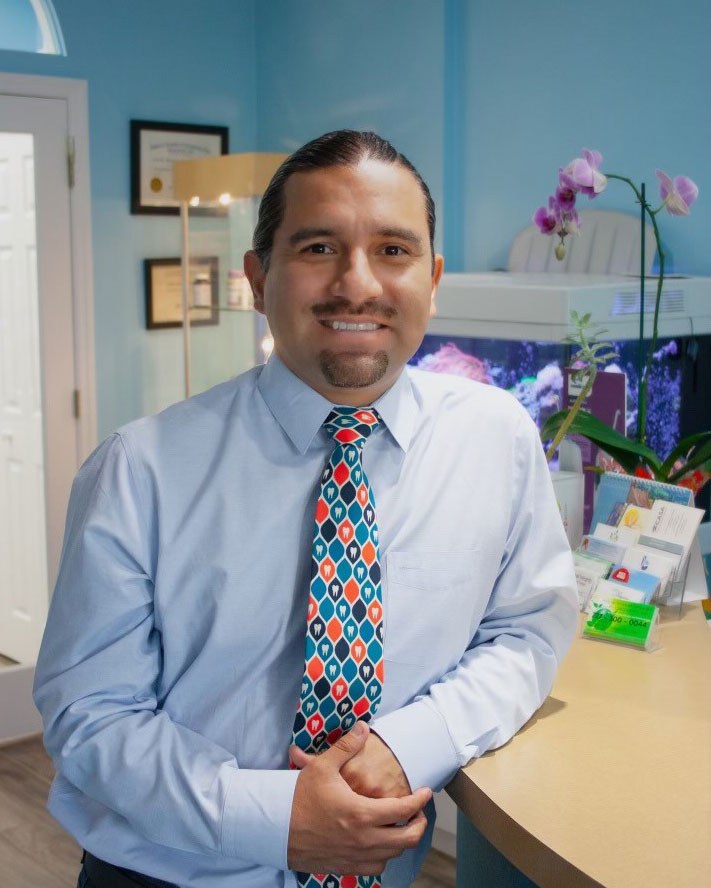
Dr. Ulrich Volz developed the first FDA-cleared ceramic dental implant and founded Swiss BioHealth in Kreuzlingen, Switzerland. Dr. Carlo Litano, DMD studied under him directly and is the only dentist in the Tampa Bay area trained in the Swiss BioHealth protocol. Every biological case at Natural Smiles is planned, placed, and finished to the same standard.
From scan to healed site, the case runs a fixed protocol arc. Traveling patients often pair surgery with a stay upstairs.
The scan reads old extraction and root canal sites in 3D, surfacing what flat films miss.
Sites get prioritized with sequence and cost in writing before anything is scheduled.
Dead and infected bone comes out; medical-grade ozone disinfects the site without antibiotics in most cases.
Platelet-rich fibrin from your own blood fills the site, and healing is tracked with follow-up imaging.
The cavitation workflow lives in three rooms: the CBCT scanner, the surgical operatory, and the ozone station.
Three-dimensional bone and soft-tissue imaging that flat 2D x-rays walk past.
Medical-grade ozone disinfects surgical sites and periodontal pockets without antibiotics.
Five private rooms with HEPA-filtered air and natural Mirror Lake light overhead.
Patients drive in from across Florida and fly in from across the U.S. A few in their own words, from 700+ verified 5-star reviews on Google and Birdeye.
"I flew in from Chicago for my cavitation surgery. Staying in the apartment above the clinic made the whole experience effortless. I left feeling better than I had in years."
"Found Dr. Carlo Litano, DMD through a functional medicine forum. Came in from Orlando for a single zirconia implant and walked out with a full plan for the rest of my mouth."
"We make the drive from Sarasota for our cleanings. Hard to find another biological dentist on the west coast who actually understands what holistic means."
The questions patients ask most about FDOJ, diagnosis, and surgical treatment.
A pocket of dead or infected bone left at an old extraction or root canal site, often invisible on standard X-rays. The clinical term is fatty degenerative osteonecrosis of the jawbone, FDOJ.
With low-radiation 3D CBCT imaging, read alongside your dental and health history. Old extraction and root canal sites get mapped in bone detail.
Surgical cleanout of the dead bone, ozone disinfection of the site, and LPRF healing drawn from your own blood, antibiotic-free in most cases. About ozone.
Yes. Cavitation cases are among the most common reasons patients fly in, and the apartment above the clinic makes surgery and follow-up one trip. Plan a visit.
Costs follow the site count and complexity read from the scan. A written estimate lands before any scheduling.
A consultation with a low-radiation 3D scan gives you a written treatment plan and cost estimate before any decisions. Call (727) 300-0044 or request a visit online.